
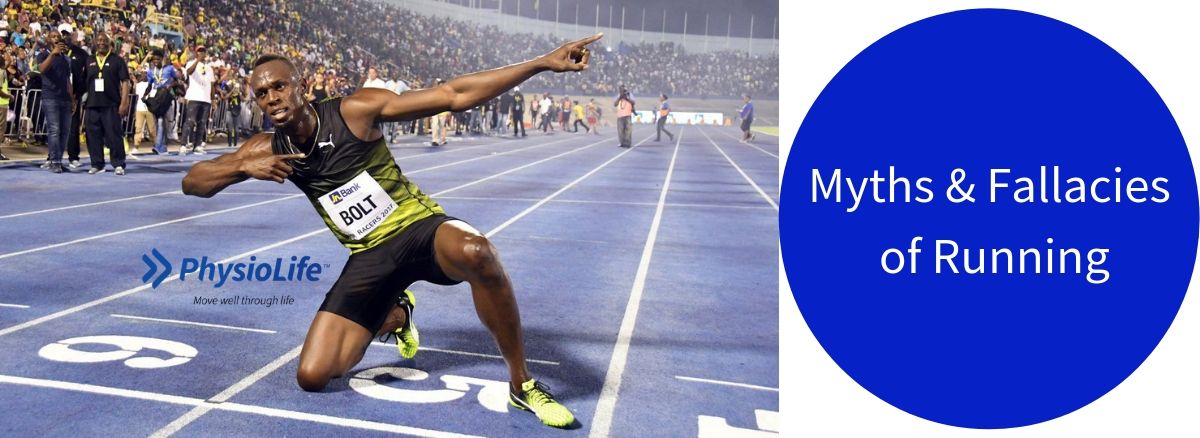
Myths & Fallaciesof Running
By Laurence Schubert APAM
Speed cannot be improved; you are born fast or slow
Wrong. There is a maximum potential that you can achieve, in enduranceor sprint events. However, 99% of us have not yet reached that potential. Thereare many different avenues to improve your running performance. Your geneticcapabilities may determine if you are suited to short or longer distances. E.g.Fast vs slow twitch fibres. In saying that, your body is very good at adaptingto your training. This means that you CAN train to get quicker, over a short orendurance running.
You should never change how someone runs, their current technique istheir best technique
Incorrect. There is an optimal way to run, and small modifications oftechnique are often necessary. This should not be interpreted as everyoneshould run the same way. Changes to technique are not necessary for everyone.However, if you are having running injuries, especially if they are recurring,running bio-mechanics is likely to be a factor.
You may be saying “what about … who is an elite athlete and runs like…”. In those circumstances it is important to remember that they also may behaving injury setbacks that you are unaware of. Many elite athletes haveundergone technique changes throughout their career. Just remember that changesto technique are individualised and depend on the bio-mechanics of thepatient/athlete.
Lifting heavier in the gym will make you faster
Not always true. Take note: strength is very important for runningperformance and should NEVER be neglected. However, if an athlete/patient isstrong enough already, focusing on improving 1 rep max may not transfer torunning. A more relevant measure would be power in the gym, e.g. how quicklycan you move a heavy weight.
During acceleration, you must create your own force to increase yourspeed. During top speed running, you are using forces that you’ve alreadycreated. This is why strength training is more relevant for acceleration andchange of direction, and lesser so for constant running.
The training volume of 1 hour of sprint work is the same as one hour ofendurance work
Different intensities. Measuring speed work vs endurance is vastlydifferent. You should not take duration as the main comparison. It is importantto consider all aspects of the training, e.g. intensity, frequency, durationand type. Having a good understanding of how to structure a running session iscritical.
Final word - How can I improve my speed?
1) Be specific with training type
2) Enhance your running bio-mechanics
3) Address deficiencies or imbalances
4) Develop an appropriate tendon stretch reflex
If you have any questions about running or physiotherapy for running please contact us or book online for an appointment