

By Adrian Benne
Snow season is upon us!
The ice crystals that Australia calls snow will soon be falling up in the fields, so it is time to wipe the dust off the skis or snowboard from storage and heat up the wax. Snowsports are immensely fun, but they are also physically demanding and potentially dangerous depending on your skill level or the terrain you are tackling. Beginners may spend more time sitting on the slope than standing, but its all part of the journey. Read below for some suggested exercises, tips and advice so you can hit the mountain with confidence day 1.
Pre-season workout ideas
Understandably, skiing and snowboarding are both very lower body dominant and dynamic sports. They require strength to absorb the bumps, endurance to make it the bottom of the run, and balance to keep those skis and boards carving on that edge. Here are a few exercises to try to get yourself ready for that first day on snow.
Quadriceps & glutes
The quadriceps are the most overworked muscle when you are on the slopes. Keeping your knees bent while you are making your way down the run forces the quadriceps to switch on and hold that position. The glutes help power through jumps and keep the pelvis and thighs stable when the slopes get demanding. Try a few of these exercises to get them ready.
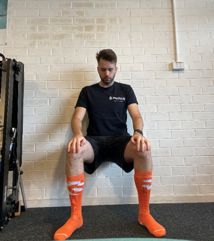
Wall sits: A good test of how long you can maintain that bent knee position, sit against the wall with knees and hips at 90degrees and hold for as long as possible.
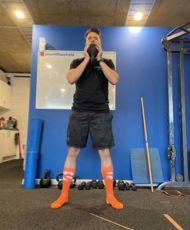
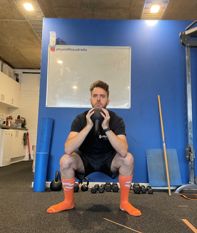
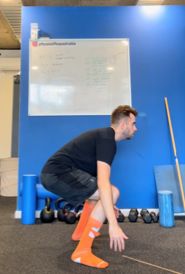
Squats: A great compound exercise that builds strength in multiple muscles across the body. Can be done with or without weights.
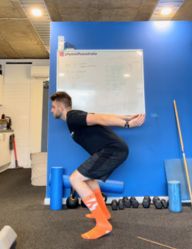
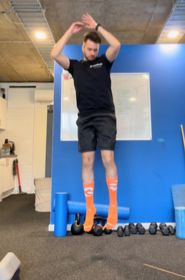
Double leg jumps (+ 180, 360deg spins): Not only will this help build strength, but it will improve control and spatial awareness in the air. If you cannot land a 180 on land, you cannot land one on snow!
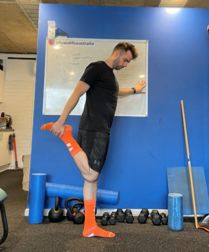
Quads stretch: Hold for 3 x 30secs. Can be done standing or lying down.
Calves & Feet
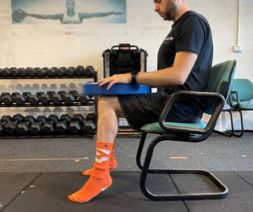
The calf muscles at the back of our lower leg help stabilise us at speed helping keep the knees bent, as well as pushing off on jumps and absorbing landings.
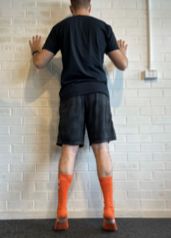
Calf raises (seated and standing): Build power in the calves! This will help keep the knees bent, hit jumps, landings, and help balance all over the mountain.
Core
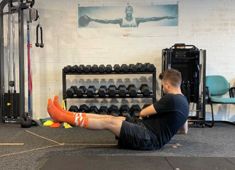
Planks & side planks: This will help core endurance so you can stay strong and stable so you don’t collapse halfway down runs.
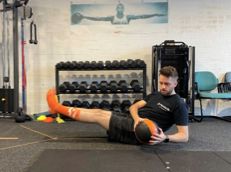
Russian twists: Rotation or counter-rotational movements will benefit from some strength in your obliques and will help initiate spins easier.
Balance
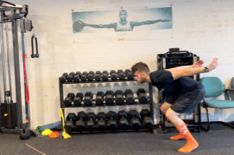
Bounds: Start with double leg for distance, then progress to single. Make sure your landings are stable with your knees travelling over your toes
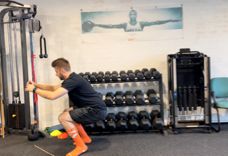
Wobble board/Bosu ball
- Clockface: Work your foot around from 12-6, 1-7, 2-8 and so on. Start off double legged and then try single leg
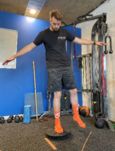
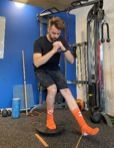
- Single/double leg squat: Incorporating a squat with a balance task will greatly improve your ability to apply power and balance during tricky terrain.
Warm up on the mountain
The worst thing you could do is arrive, boot up, and send it full speed down your first run and suddenly feel a pop or strain and end your day (or even week/year) just as its started. Try completing a few of the above exercises or stretches when you arrive at the mountain to warm-up, it may even help identify a problem area before you even strap in.
At the very least take it easy on your first run. It gives you time to actively warm up by performing the same actions you would be doing anyway, but it also gives you the chance to assess the terrain. Surprise rocks or moguls are no fun when you are going too quick to adjust.
Push the boundaries, but know your limits
- Prevention is always better than rehabilitation. There is protective gear for just about everything, but a helmet should be worn at the bare minimum.
- Pushing the boundaries is the only way you will improve but its important to do so safely.
- Know the terrain you are riding, it is a great way to ensure you’ll make it to the bottom in one piece.
Despite all the preparation, you never know if a rogue skier or snowboarder is going to hit you from the side, or a sneaky branch under the pow is going to send you into an accidental tamedog.
Accidents do happen, so if you have come off second best against a tree, or something just isn’t feeling right after a fall, call the clinic for an assessment on (03) 9459 5849, or book online. Happy shredding!