
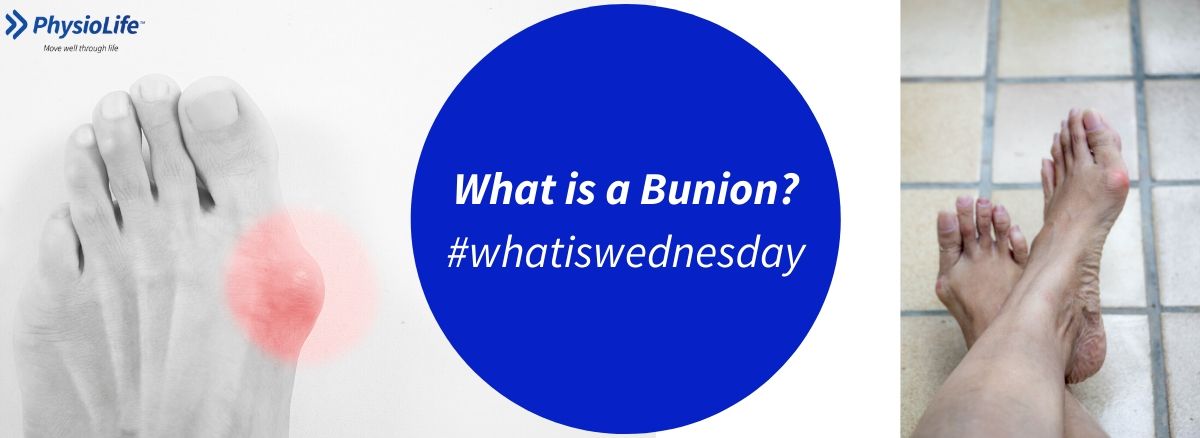
What is a Bunion?
By Laurence Schubert APAM
Hallux valgus, more commonly known as a bunion, is a progressive condition inwhich your first metatarsophalangeal (MTP) joint becomes subluxated over time. TheMTP is located at the ball of the foot. As the condition progresses, this jointbegins to deviate causing the phalanges to adduct and the metatarsals toabduct. This leads to a bony prominence on the lateral aspect of your foot andassociated soft tissue deformities. The angle that your bunion creates is knownas the Hallux valgus angle. Anything less than 15° is considered normal, greater than 20°is considered abnormal and greater than 45° is considered severe.
Is it Common to have a Bunion?
Overall, 23%of adults aged 18-65 years and 35% of adults over 65 years. There is a higherprevalence in women compared to men, as well as in the elderly population. Soyes, almost one quarter of middle aged people have some degree of a bunion.
What Causes a Bunion?
The exactcause of a bunion is unknown; however it is likely to be a result ofbiomechanical changes that occur in your feet. It is clear that type offootwear plays a significant role in the cause of bunions. Bunions are approximately 10 times moreprevalent in Western countries compared to Eastern countries. Therefore, it isthought that due to cultural differences such as style of shoe, increase theprevalence of bunions. For example, narrow fitting shoes that push the big toeinto adduction (inwards) causes damage to the MTP (joint at ball of the foot).Additionally, high heels increase the amount of weight through the front ofyour foot; as a result your body tries to increase the width of surface area tosupport this change. After prolonged use of constraining footwear, your footbegins to adapt and compensate for this change, leading to the development of abunion. Other factors are also thought to contribute to the cause of a bunion.
Signs and Symptoms of aBunion
You will noticea bump forming on the medial aspect of your big toe (MTP) joint. As thebunion/bump begins to appear, it will lead to irritation and inflammation ofthe MCL ligament and MTP joint. Local tenderness of the bunion and hardenedskin will also be present.
These factorslead to a change in gait pattern, often with increased weight bearing throughthe lateral aspect of the foot. Furthermore, there will be swelling, pain andweakness of the muscles surrounding the big toe and foot.
How do you manage a Bunion?
Obviously,prevention is the goal in the ideal world, this would include modifyingfootwear that fit and ensuring you have an appropriate gait pattern. However,I'm sure you wouldn't be here if you wanted prevention! Once a bunion isbeginning to form there are several strategies you should explore beforeseeking a surgical opinion.
Non-operative management ofa bunion
- Adjustment of footwear - ensure there is enough space and width for your foot, particularly your toes.
- Strengthening of foot and ankle muscles - strengthening your peroneus longus muscle is crucial in order to maintain stability and appropriate gait pattern. The peroneals run on the lateral aspect of the shin but attaches underneath the medial foot on the first metatarsal (just below the big toe).
- Gait re-training - as part of strengthening program it may be necessary to address any abnormalities that have developed due to the bunion. This will assist in reducing the stress on the bunion and decreasing the likelihood of the injury worsening.
- Addressing pes planus (flat foot) - this can be improved through strengthening and control exercises as described above, however in some cases the use of orthoses are used.
- Physiotherapy manual therapy techniques - this includes graded mobilisation of the sesamoid bones, release of soft tissue structures, trigger point therapy and taping.
Yourphysiotherapist will work with you in determining the most important factorsfor you to focus on during your treatment. Initially the main aim will be torelieve your pain and minimise your swelling. Following this, a period ofrehabilitation will address any biomechanical deficiencies that are present.
Surgical management of abunion
There arenumerous different surgical procedures that can address a bunion. This shouldonly be considered after at least 3 months of conservative management has beenattempted and shown little to no improvement. Majority of these surgeries willinclude the use of surgical metal wear in order to fixate the new position ofthe joint.
To get you started:
- Towel toe curls - stand with one foot on a towel and scrunch the towel towards you by using your foot muscles. Complete 10 sets twice daily.
- Single leg balance - stand on leg balancing, aim for 30 seconds, close your eyes if too easy. Aim 30 sec x 5, twice daily.
- Ice therapy - place a cold pack on your bunion once daily for 20 minutes.
If you have any questions about bunions or foot pain, please contact us or book online for an appointment.