
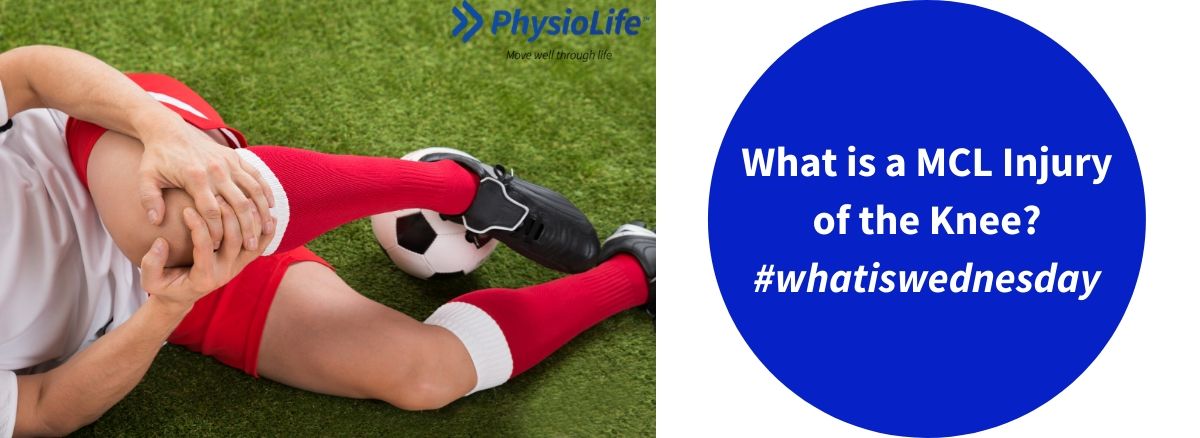
What is a Medial Collateral Ligament (MCL) Injury of theKnee?
By Laurence Schubert APAM
What is the MCL?
The MCL stands for Medial Collateral Ligament. The MCLdoes not solely exist in the knee as other areas of the body also have an MCL,e.g. the elbow. Medial refers to the inside part of the body, collateralmeaning an accessory part and ligament being a strong connective tissue. TheMCL attaches from the inside of the femur, running along the knee and attacheson the medial aspect of the tibia. The MCL is one of four knee ligaments thatare critical in maintaining support of the knee.
What injury can occur to the MCL?
MCL injury can include a stretch, partial tear orcomplete tear of the ligament on the inside of the knee. Other injuries thatmay masquerade as a MCL injury include medial meniscus, ACL tear, patelladislocation, tibial plateau fracture, medial knee contusion (bruise).
How do injuries to the MCL occur?
MCL injuries are one of the most common injuries of theknee. It occurs when a valgus force causing the ligament to stretch beyond itsstructural capabilities. A valgus force is one that pushes the outside of theknee inwards, causing a stretching of the medial structures. Generally, thisoccurs from impact, or when the lower leg is in contact in the ground andunable to move. A combined movement of flexion/valgus/external rotation is themain mechanism of injury to the MCL.
What are the Symptoms of an MCL injury?
MCL knee injuries are graded on a 1 to 3 scale, with 3being a complete rupture of the ligament. Depending on the degree of injurywill determine the presentation of the condition.
Grade 1: Mild medial kneepain, mild swelling, possible limp and tenderness on palpation of MCL ligament.
Grade 2: Moderate medial kneepain, moderate swelling, limping and instability.
Grade 3: Severe medial kneepain, heavy swelling and knee gives way under valgus force.
What is the management for injuries to theMCL?
Initially, it is important to determine the extent of theinjury. In more severe cases of knee trauma, the MCL along with otherstructures will also be injured. For example, if a complete rupture of the MCLligament has occurred (grade 3), it is extremely likely there is damage to asurrounding ligament or knee cartilage. ACL and other knee ligaments should bescreened after any suspected MCL injury.
Majority of MCL injuries can be treated non-operatively,requiring physical therapy for a period of weeks. However, for grade 3ruptures, it is likely to require surgery. In the initial phases ofrehabilitation, you will want to:
- Restore range of motion as early as possible.
A comprehensive rehabilitation program is critical duringrecovery. This will include the ability to control the knee and regain strengthin the surrounding structures. This will take anywhere from 2 – 12 weeks formajority of cases.
Can MCL injuries be prevented?
Yes, to a certain extent. During contact sports it issometimes impossible to avoid injury when unexpected forces interact with theknee. However, there are ways to significantly reduce the likelihood of theknee being in a dangerous situation, for both contact and non-contact sports.
- Appropriate neuro-muscular warm up – control/proprioception exercises. This includes single leg landing and explosive change of direction.
- Strengthening and control programs – building up strength and control in lower limb and trunk to ensure proper alignment and reduce the risk of the knee being in a poor position.
If you have any questions about knees or MCL injuries, please contact us or book online for an appointment.