
AchillesTendon Tears
By Laurence Schubert APAM
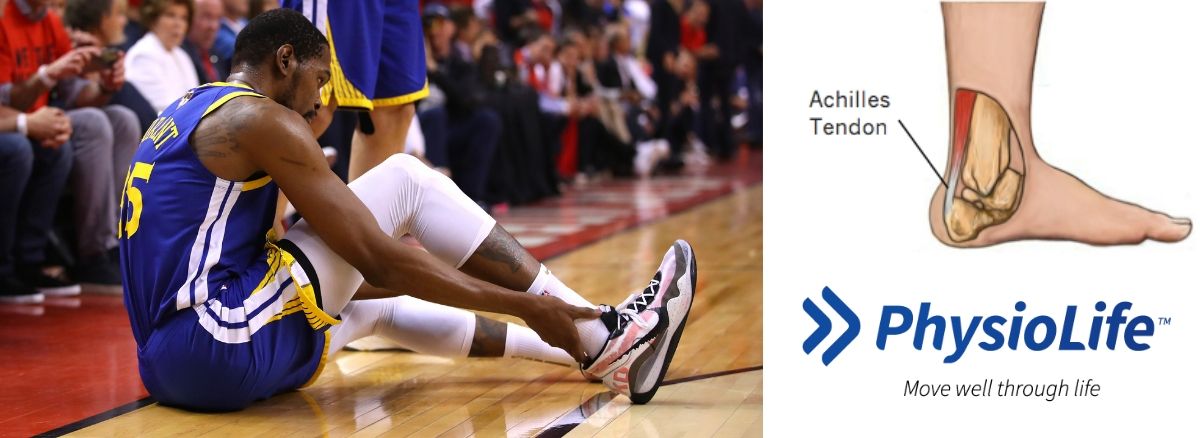
After the Kevin Durant injury in Game 5 of this years NBA finals series, we have been asked by many people about this. Rather than speculate and give opinion of whether or not he should have been on the court, Laurence gives a brief description of an Achilles Tendon injury.
What is it?
Tendons are a continuation of muscle that acts as aband/connective tissue in order for the muscle to create movement. The Achillestendon is thick, strong and the largest tendon in the human body. When the calfmuscle contracts it pulls the heel up, allowing you to stand on your toes orpoint your foot.
Achilles tendon tear commonly occur in athletes, however,anyone can be affected by this injury. A complete tear is actually more commonthan a partial tear. Typically, the tear will occur approximately 6cm abovewhere the tendon attaches to the heel. However, the tear does not always occurin this location.
What arethe symptoms?
Following an Achillestendon tear, there will be difficulty with any locomotion (walking/running),and jumping. If there is a complete tear, you will be unable to walk. Othersigns that you may have ruptured your Achilles include:
- A loud pop or snapping noise is heard
- Extreme and sudden pain in the back of the calf
- Feeling of being shot in the back of the calf
- A gap where the complete rupture has occurred
- Swelling, bruising and stiffness
- Difficulty standing on toes
What causesit?
The Achilles tendon will be injured if a force exceeds theamount of the tendon can withstand. Commonly, the injury will occur duringrunning or jumping.
Over time, the Achilles tendon can weaken as we age andbecome more susceptible to injury. Being inactive will further increase yourchances as the tendon's load capacity will decrease. Having pre-existingAchilles tendinopathy further increases the chances of a tear. Other factorsalso affect the health of a tendon, such as: medication, diabetes, arthritisand diet. Being overweight also increases the straining force that is putthrough the tendon.
How canPhysiotherapy help?
If the tendon is completely ruptured then surgery will bethe likely management option. However, it can still be managed conservativelydepending on your goals. Physiotherapy will confirm the diagnosis and propose amanagement plan over the rehabilitation period. Initially, physiotherapy willassist to manage pain and inflammation and then begin the journey back tonormal movement. Typically, the rehabilitation program will include stretching,strengthening and training certain aspects of movement/co-ordination. Returnto sport will typically take between 6 – 12 months.
If you have any further questions about Achilles Tendon injuries, please contact us or book online for an appointment.