
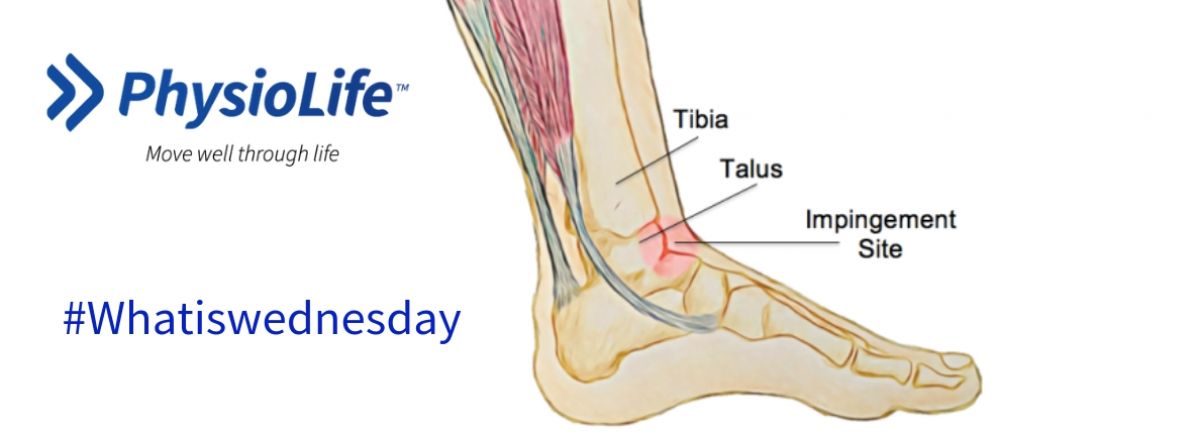
What is it?
Anterior ankle impingement or syndrome is a musculoskeletalcondition caused by repetitive compressive forces that damage the tissues atthe front of the ankle. As a result there is often pain and stiffness at the frontof ankle. This injury is most commonly seen in sportspeople that completerepetitive movements of the ankle, such as sprinting, landing, and hillrunning.
What are thesymptoms?
Pain at the front of the ankle, this can be sharp duringcertain movements or a dull ache following periods of exercise. Pain duringweight bearing activities such as standing, walking or running is also verycommon. Increased stiffness, swelling and aching are typical symptoms thatoccur at the end of the day and at night time.
How does it happen?
The ankle joint comprises of multiple structures; such asbone, ligaments and tendons. During ankle dorsiflexion (foot towards head) thetibia and talus bones move towards each other. If this movement occursrepetitively and traumatically then it leads to damaged and inflamed tissues.Over time the condition can become chronic, leading to further stiffness, thusexacerbating the impingement process.
Having a previous ankle sprain is the most common riskfactor for anterior ankle impingement. If the sprain was not adequatelyrehabilitated, there is often residual stiffness or instability. Smallosteophytes (bony spurs) are another cause of this condition, as the bony spurspress repetitively against other tissues. Osteophytes may grow due toosteoarthritis or as a result of the anterior impingement itself. Other riskfactors include: poorly planned training programs, muscle tightness,unsupportive footwear, and a hypermobile ankle joint.
How can physiotherapyhelp?
Your physiotherapist can help reduce the pain in your ankleand identify the cause(s) of your ankle impingement. After completing athorough assessment your physiotherapist will propose a treatment plan to getyou back doing your desired activities pain-free. Typically, this will involvea period of modified activity in order for the inflammation to settle. As wellas accompanying treatment such as mobilisation techniques, soft tissue massageand range of motion exercises. As part of your rehabilitation, proprioceptionor balance exercises will be necessary to improve the control of your ankle. Ifthere are any other identified deficits, additional treatment will be providedto address those.
In severe cases, surgical intervention may be recommended byyour physiotherapist in order to reduce physical causes of the impingement suchas osteophytes removal. Thus, allowing a greater impingement free range of motion. However, generally this condition will respond well to appropriatenon-surgical treatment.
If you think you need help with anterior ankle impingement or any other ankle concerns please contact us or book online for an appointment!