
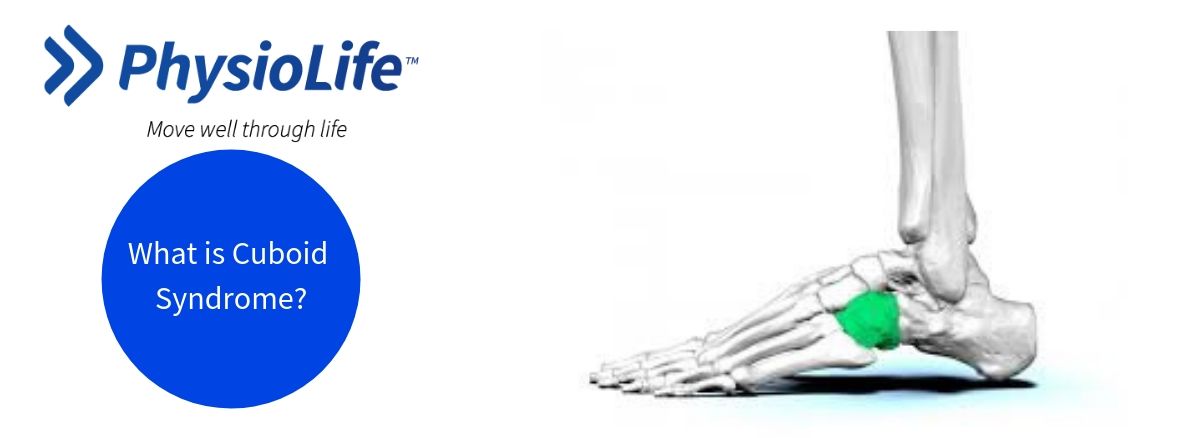
CuboidSyndrome
With the Melbourne Marathon getting closer, Melbournians arestarting to ramp up their training volume. As a result, running injuries becomemore and more present. A commonly misdiagnosed injury of foot is Cuboidsyndrome and accounts for approximately 4% of all foot injuries.
What is CuboidSyndrome?
Cuboid syndrome is injury that results in pain in the mid-footregion. Cuboid syndrome is poorly understood in terms of what the exact causeof pain is. However, we know that the injury affects the joint capsule of the calcaneocuboid (CC), ligaments of thefoot/ankle and the peroneus longus tendon.
The likely mechanism of injury for Cuboid syndrome is:
1. Acute inversion injury (e.g. sprained ankle)
2. Overuse injury (e.g. runners)
Biomechanics ofCuboid Syndrome
There are various biomechanical factors that may predisposeyou to cuboid syndrome. This also includes running technique; therefore runninganalysis may be necessary in some cases. Factors that increase the likelihoodof cuboid syndrome include:
· - Mid-foot instability
· -Excessive bodyweight
· -Poor load management
· - Unsuitable foot orthoses or shoes
· -Previous acute ankle injuries
· -Supinated foot strike during running
What are the symptomsof Cuboid Syndrome?
The most obvious symptom is pain on the lateral (outside)plantar aspect (underneath) of the foot. This pain is most prominent duringweight bearing, which may include: walking, running or hopping. Depending onthe severity of the injury will determine how much weight can be toleratedthrough the foot. There is likely to be tenderness on cuboid bone as well asalong the peroneals (muscles on outside of your leg) and extensor digitorumbrevis muscle. There may be decreased range of motion and difficulty performingchange of direction due to the pressure on the outside of the foot.
If Cuboid syndrome is a result of an acute ankle sprain, theabove presentation will be associated with symptoms caused by the ankle injury.Therefore, increased swelling and pain on the lateral aspect of the ankle jointis expected.
Is the Cuboid bonetruly subluxated?
There is dividing belief in regards to whether the cuboidbone is truly “subluxatedâ€. This term refers to the incomplete or partialdislocation of the joint. There are multiple sources that suggest amanipulation such as the cuboid whip or cuboid squeeze be used to treat thiscondition. Some sources even suggest a “pop†can be heard during thistechnique. It is possible for this to be true; however in most cases, this isunlikely to occur. The cuboid bone may be displaced, but only by small margins.Therefore, the term subluxation may not be the most appropriate for describingthis condition.
How do you manageCuboid Syndrome?
There are multiple ways to address cuboid syndrome. Yourphysiotherapist will help identify the most significant factors for you.Initially, it is important to assess the condition to ensure the diagnosis.There are other foot injuries that present similarly such as: stress fractures,peroneal tendinopathy, plantar fasciitis, gout, lisfranc injury orantero-lateral ankle impingement. Once diagnosed, the physiotherapist will aimto reduce pain and inflammation in your foot. This can be achieved bymobilisation of the calcaneal-cuboid joint, ankle mortise and other mid footjoints. Soft tissue massage can be used on the peroneals and muscles (tendons)of the foot.
Other important management strategies may include loadmanagement, footwear adjustments and biomechanical modification.