
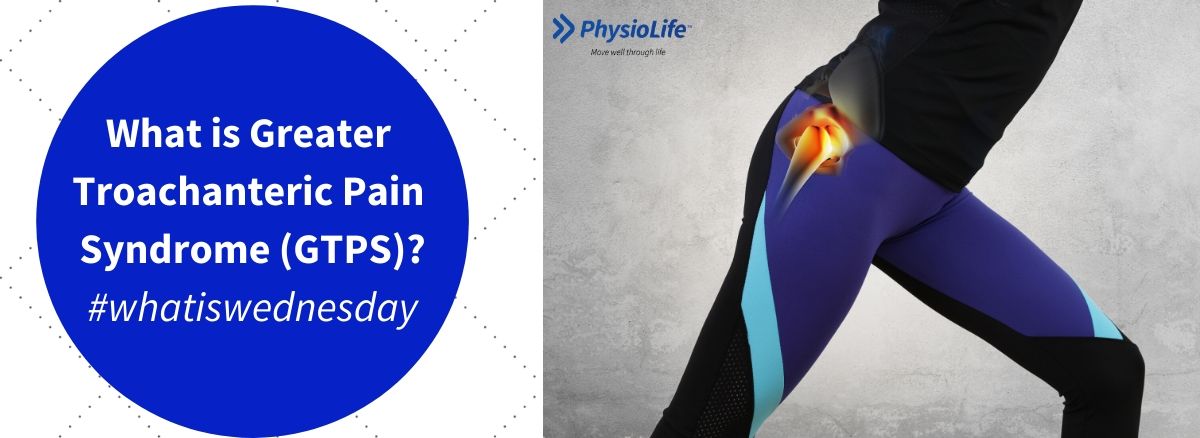
Greater Trochanteric PainSyndrome (GTPS)
By Laurence Schubert APAM
GreaterTrochanteric Pain Syndrome (GTPS) is a modern-day term that describes lateralhip pain, that includes trochanteric bursitis associated with tendinopathy ofgluteus medius and gluteus minimus (among other muscles). Previously, thiscondition was referred to as trochanteric bursitis, however the new definitionrecognises that inflammation of the bursa typically exists due to glutealtendinopathy and not solely due to inflammation. Some small studies have found thatthe bursae can be a possible source of pain for GTPS patients.
Tendinopathy encompassesany injury to the tendon, including failed healing, intracellularabnormalities, disruption of collagen fibres, and inflammation of the tendon.Tendon tears are commonly missed during the diagnosis of GTPS. According toDomb et al. (2010), up to 25% of middle-aged women can have glute medius tears,and up to 10% of middle-aged men. Majority of tears are degenerative as opposedto acute and different types of tears exist, with partial tears the most common.
Relevant Anatomy
The greatertrochanter is a bony landmark on the lateral aspect of the hip (part of thebone that sticks out if you slide your hand down the side of your hip). Thislandmark is clinically significant as your glute muscles attach to this point.Secondly, there are various bursae that are located around this bony landmark,most notably the trochanteric bursa. There are three layers of the glutes;gluteus maximus, gluteus medius and gluteus minimus, each muscle respectively deeperthan the previous. The glutes work together to perform movements of the hip,the maximus primarily an extensor, whereas the medius and minimus are neededfor abduction and stabilisation. The iliotibial band (ITB) and tensorfascia latae (TFL) also cross over the greater trochanter.
Symptoms
The mostcommon symptom is pain on the lateral aspect of your hip that may radiate downthe thigh and buttocks. This typically occurs gradually, with an insidiousonset. The pain will generally present as an ache but can be sharp when certainmovements are performed. Symptoms include:
- Pain on palpation of the greater trochanter.
- Pain with resisted abduction or external rotation of the hip.
- Pain when the hip is in adduction e.g. sitting cross legged.
- Pain when lying on the injured side e.g. lying in bed.
- Difficulty and pain performing tasks that require standing on one leg e.g. climbing stairs, walking, running.
Aetiology (Causes)
As GTPSencompasses multiple injuries that contribute to the pain, the exact cause ofthe issue varies. For tendon injuries the cause is likely due to overuse,mechanical overload and incomplete healing of the tendon. Compressive forcesalso contribute to the tendon injury. The combination of tensile andcompressive force on the tendon is believed to cause the most disruption tonormal function.
Weak hipabductors are the most significant biomechanical factor when considering GTPS. Witha lack of strength and control it increases the compressive and tensile forceson the glute tendons. During adduction the hip is in a position where the ITBcauses a compressive force. Therefore, with a lack of abduction control thebody is placed under more stress more frequently. When the hip is placed inflexion the compression force of the ITB is increased, which may explain whypain occurs with long periods of sitting.
Gender isanother factor that increases the likelihood of developing GTPS. Typically,females have increased hip width (Q angle), which increases the compressive andtensile force on the glute tendons. Secondly, there was one study that foundfemales have a smaller insertional area to which the glute medius tendonattaches, resulting in a greater concentration of tensile forces on theinsertion point.
Differential Diagnosis
It isimportant to obtain an accurate diagnosis in order to ensure treatment iseffective. The most common differential diagnoses include:
- Hip OA.
- Labral tear.
- Femoral head avascular necrosis (AV).
- Femoral Acetabular Impingement (FAI).
Unlike GTPS,the above conditions include symptoms such as: locking/catching, pain with passiveinternal rotation, groin pain, thigh pain and knee pain. Other commonconditions that may present similar to GTPS include:
- Lumbar spine referral.
- Inflammatory joint disease e.g. Rheumatoid Arthritis (RA).
- Neck of femur fracture.
- Piriformis Sydnrome
Management
Non-Surgical
Majority ofGTPS cases can be managed non-surgically; conservative measures should beattempted for at least 6-8 weeks before considering surgical options. Treatmentoptions include:
- Other painmanagement strategies such as extracorporeal shockwave therapy (ESWT).
Physiotherapy
Education
Duringphysiotherapy the focus will be to educate the patient on how to best managethe condition and improve recovery time. For example, patients should avoid anyaggravating activities such those listed above under symptoms. Patients can sleep with a pillow in between their legsand should avoid stretching of the ITB and gluteal muscles.
Manual therapy
During physiotreatment your practitioner will focus on any areas that are contributing toyour injury, e.g. this may include release work through ITB, lumbar spine,glutes.
Exercise
Exercise willfocus on correcting any biomechanical insufficiencies that have been identifiedas well as progressively loading the injured tendons. In order to reduce painand improve strength isometric muscle contractions are a great way to beginearly phase rehab. Isometric contractions of 45 seconds have shown to besignificant in reducing pain for most tendon injuries. Strengthening shouldfocus on the glute medius, glute minimus and other areas that contribute to hipstability such as the core and lumbo-pelvic stabilisers.
Example of phase 1 rehab exercises:
- Standing hip extensions 3 x 10 (with 3 sec holds).
- Glute bridge 3 x 10.
Surgical intervention
Ifnon-surgical treatment fails, then considering some surgical options may benecessary.
- Bursectomy removal of some of the inflamed bursa.
- IT band surgery this includes release and resection of the ITB in order to release the compressive force on the glute tendons.
- Reduction osteotomy of the greater trochanter reduction of the bone, if the above two surgical options have failed.
- Reconstruction / repair of the abduction tendon in cases where the glute tendons have a significant tear then surgical repair is necessary.
If you haveany questions about hip pain, please contact us or book online for anappointment.